
Beyond the Avatar: Weaponizing Identity in the Era of Deepfakes
An “Under-the-Hood” Defense Guide for the 2026 AI-Driven Elections

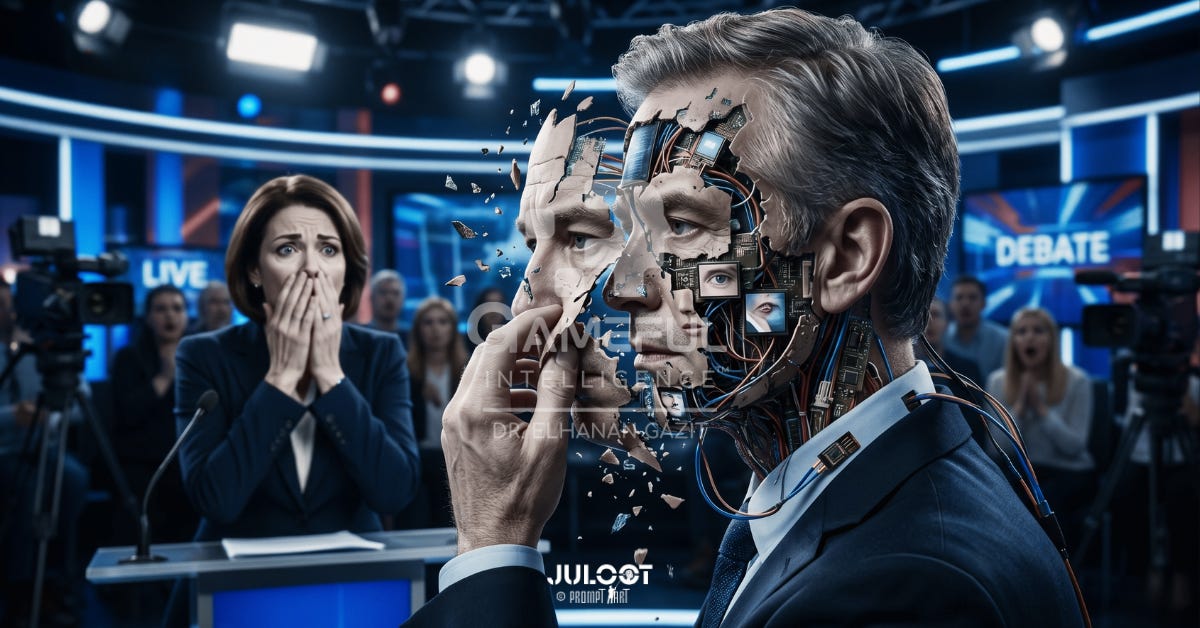
In my first article, I explored the “virtual room”from the nuances of XR-based collaboration and hyper-realistic avatars to the disruptive presence of AI “panelists.” I analyzed what research reveals about our cognitive limits and our frequent failure to discern who is truly behind the digital mask.

In this second article, I pivot from the boardroom to a far more volatile arena: the ballot box.
I am tracking these same cognitive vulnerabilities as they migrate into the political sphere. If we already struggle to authenticate identity in controlled, immersive environments, what happens when these same deepfakes and generative models are unleashed on the 2026 US Senate races and the Israeli General Elections? Here, the stakes shift from individual confusion to a collective democratic crisis.
To provide a comprehensive analysis of the 2026 landscape, we must look past polished press releases and confront the systemic failures that leave our defenses fragile. As we approach these critical elections, our methods for fighting AI-driven propaganda are currently in a state of high-stakes improvisation.
Let’s look under the hood at the methods and the gaps in our defense against the next wave of synthetic propaganda.
Why the Defense is Faltering: A Report from the Trenches
To understand why our digital shields are cracking, we must look into the “trenches” of the 2026 information war. Here is why current defenses are failing to hold the line.
1. The “Detection Deficit” and Adversarial Smudging
Imagine a social media moderator using a tool to scan a suspicious video. In a lab, this tool is 95% accurate. However, if the uploader makes a minor change—slightly cropping the edges or adding a subtle “vintage” filter—the AI’s forensic “fingerprints” are instantly smudged. The tool’s accuracy drops significantly, and the fake video stays online.
This reality is known as Adversarial Smudging. Research by Carlini and arid (2020) showed that even “low-tech” edits, such as changing resolution or adding noise, can bypass current AI detectors. Propagandists now use Adversarial Training, where they “teach” their AI generators how to bypass the specific filters used by platforms like Meta and X. By the time a detector is updated to recognize a new model, the viral damage is often already irreparable.
2. The “Liar’s Dividend”: Truth as a Partisan Choice
A recording surfaces of a politician making a scandalous comment. It is 100% real. However, the politician immediately goes on TV and says, “This is an AI-generated deepfake created by my enemies.” Because the public knows that AI can mimic voices, many believe the lie. The truth is dismissed not because it is fake, but because the possibility of a fake exists.
This phenomenon is known as the “Liar’s Dividend,” a concept pioneered by professors Bobby Chesney and Danielle Citron. In the 2026 election cycle, this has become a standard escape hatch. Authenticity is no longer a shared fact; it has become a partisan preference. If you like the candidate, it is “real”; if you hate them, it is “AI.”
3. The “Analog Hole” and the Metadata Myth
Security experts hope that digital watermarks will save us, but a simple loophole exists. A propagandist plays a deepfake video on a high-resolution 4K monitor and then films the screen with his smartphone. This new recording “cleanses” the file, stripping away the digital watermarks and cryptographic signatures that could have identified it as a fake.
That is the “Analog Hole”—a gap in the digital chain that no software can close. These “clean” files then circulate through encrypted networks like WhatsApp and Telegram. In the Israeli political landscape, these private groups are the primary source of news. Because these platforms are encrypted, national detectors and “AI-generated” labels cannot see or stop the content before it reaches millions of voters.
4. Psychological “Flooding” vs. The Speed of Fact-Checking
A voter sees a shocking headline ten times in one hour, posted by ten different “people.” Even if he later reads a correction, a part of his brain still believes the headline. He has fallen victim to the ‘Illusory Truth Effect’ his brain mistook “repetition” for “truth.”
The current defense is built on Debunking, which is fundamentally too slow. AI enables “Synthetic Grassroots” (Astroturfing) at an unprecedented scale. By the time a fact-checker or the Israel National Cyber Directorate (INCD) flags a single deepfake, 10,000 AI personas have already shared and “validated” it. That is the “Firehose of Falsehood.” The sheer volume of the lie overwhelms our cognitive capacity to catch up.
5. Geopolitical Asymmetry: The Long Game of Invisibility
In the past, propaganda was loud and shocking. In 2026, it is often invisible. A foreign state actor doesn’t just create a fake video of a leader. Instead, they create an AI persona that appears to be a “regular neighbor” in a local Facebook group. This persona shares recipes, talks about sports, and, over six months, slowly begins to share subtle political “concerns.”
That is Perception Management. While Western defenses focus on Transparency (like labels), adversaries weaponize Invisibility. These “sleeper agents” radicalize community groups from the inside. There is currently no legislative fix for an algorithm that spends half a year earning your trust before it tries to change your vote.
Holding the Line: A Research-Backed Defense Guide for 2026
To transition from “high-stakes improvisation” to a resilient defense, we must implement strategies proven in recent conflicts and academic trials.
The Digital DNA: Solving the Identity Crisis
Imagine a journalist filming a meeting between a candidate and a foreign lobbyist. In the past, the candidate could dismiss the footage as a deepfake. But in 2026, the journalist’s camera “signs” every pixel the moment it is recorded. This digital signature proves exactly when, where, and how the video was made.
That is the power of Hardware-Anchored Provenance. We are moving away from software watermarks, which are easy to erase or “smudge.” Instead, we use the C2PA (Content Credentials) standard—a “digital birth certificate” for a file embedded directly into the hardware. If a video lacks this certificate, platforms can flag it as “unverified” by default, forcing the public to ask for proof before they believe what they see.
The Human Firewall: Learning the Tricks of the Trade
A young voter receives a video of a politician admitting to a scandal, but she doesn’t share it. Why? Because last week, she saw a short video explaining how “emotional triggers” are used in deepfakes. She recognized the trick immediately. She was “vaccinated” against the lie before she even saw it.
This strategy is called Pre-bunking, based on Inoculation Theory from the University of Cambridge. Most defenses try to “debunk” a lie after it goes viral, but by then it is often too late. Pre-bunking teaches the public the methods of manipulation, such as using “fake experts” or “scare tactics.” By showing how the “magic trick” is done, we build a “human firewall” at the most critical point: the person holding the phone.
The Golden Hour: Outrunning the Algorithm
In the middle of the night, a deepfake of an Israeli minister begins to flood WhatsApp groups. Speed is the only way to beat the Illusory Truth Effect. In Taiwan, and increasingly in Israel, there is a 60-Minute Rule. Within one hour, the government releases a factual, often humorous response that explains the fake.
To fight this, defense task forces must use “Rapid Response Units.” These units create viral content that travels as fast as the lie, reaching the public during the “Golden Hour”—the first sixty minutes after a fake is posted—before the misinformation becomes an entrenched belief.
Semantic Forensics: Looking for the “Glitch”
A foreign agency creates a deepfake of a US Senator. The lighting is flawless, and the voice is identical. But there is one problem: the Senator’s pulse does not match the rhythm of his speech. The AI forgot that a human heart affects the way a person talks.
This is Semantic Forensics, pioneered by DARPA’s SemaFor program. While traditional detectors look for digital fingerprints, semantic forensics looks for human inconsistencies—like biologically impossible earlobe shapes or eye reflections that defy physics. Even if a propagandist uses Adversarial Training to “teach” an AI how to hide, they still struggle to replicate these deep biological truths.
The Israeli Infrastructure: Closing the Loop
An Israeli citizen receives a suspicious WhatsApp message. Instead of forwarding it, he clicks a button to send it to a verification bot. Within seconds, the INCD confirms it is a fake. The chain is broken.
Israel has built a “Cyber-to-Citizen” pipeline through the INCD 119 Hotline and the IFLAG platform. During the 2026 cycle, WhatsApp-based verification bots have proved to be the most effective tool because they meet voters where they are. By providing truth in private, encrypted spaces, they ensure that the “Analog Hole” of peer-to-peer messaging does not become a gateway for chaos.
Final Thought
Our defense cannot be a single wall. It must be a “Defense-in-Depth” strategy, combining hardware security, rapid response units, and a “pre-bunked” public. In the 2026 elections, the winner will not be the one with the most powerful AI, but the one with the most resilient chain of trust.
Till next time,
✨Mega-Play Your Life.
Note: The complete references list of this essay will be featured on my forthcoming book: Gameful Intelligence™: The Art of Thriving in the Era of AI. (Tentative, due: late 2026).
Disclaimer:
Any references to public figures are used for commentary, criticism, education, and analysis and do not imply endorsement or affiliation. All third-party trademarks are the property of their respective owners. Read the full Disclaimer, Copyrights, Trademark & AI Disclosure » here