

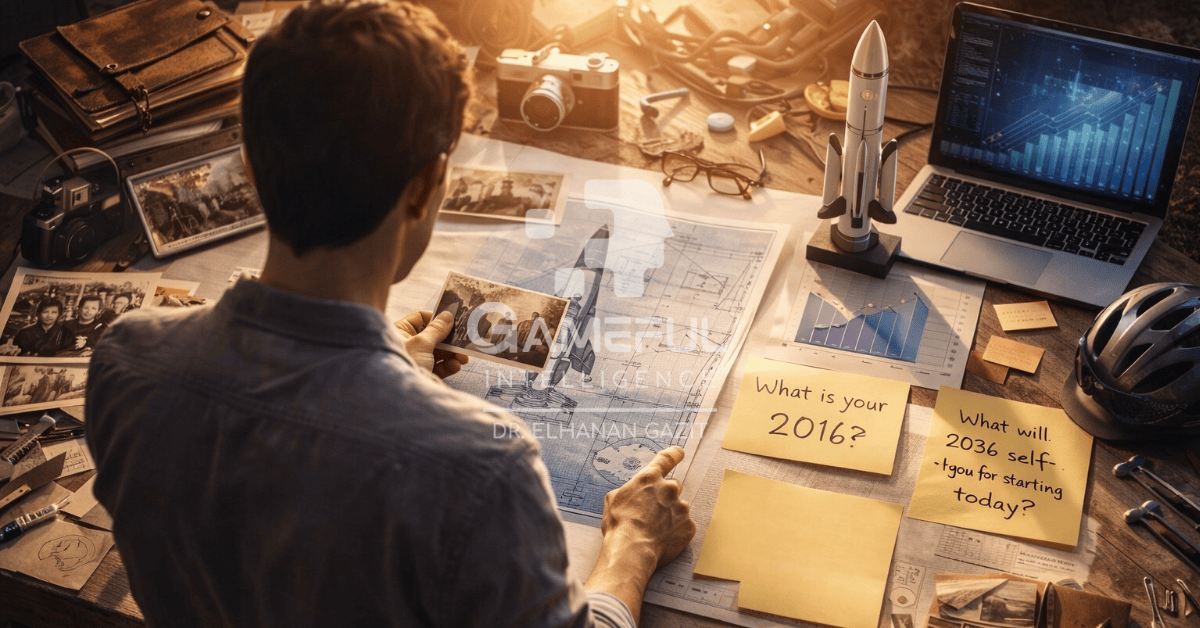
TL; DR
Nostalgia, often dismissed as mere sentimentality, can quietly become a catalyst for personal growth. Rather than simply revisiting old memories, I find myself wondering: what if these fragments of the past could be interlaced within the fabric of our present ambitions? Sharing our stories is not just an exercise in nostalgia; it can open unexpected doors, spark new collaborations, and deepen the sense of meaning in our work.
In a world that seems to accelerate with each passing year, nostalgia offers more than comfort. It becomes a lens via which we can discern patterns and lessons otherwise lost in the noise. Some of the most enduring innovations arise not from chasing the new, but from returning to disregarded ideas, quietly waiting in the archives of our collective memory. The rediscovery of a forgotten feature, for instance, can sometimes spark a transformation that no amount of forward-looking analysis could predict.
Let’s dive in:
Like many others, my friend Alice recently felt compelled to share her old 2016 photos on social media. What drives so many to revisit and repost old content on platforms like TikTok and Instagram?
The answer to this #2016memories trend lies in our search for meaning and momentum from the past. Recent social media analytics indicate that the hashtag #2016memories saw a 150% increase in usage over the past month, highlighting the strong emotional pull of this trend.
It is not random.
Perhaps our minds long for the clarity of days before the world became so entangled with algorithms and uncertainty. Nostalgia is not simply a retreat; it is a subtle re calibration, a way for the mind to restore coherence amid fragmentation.
Neuroscientists tell us that our brains are wired to replay moments of joy rather than failure, and while algorithms may amplify this tendency, the deeper truth is our enduring search for meaning in a world that regularly feels disjointed.
When revisiting your digital memories, consider not only what you miss but also which strengths or values from that time you can apply to current challenges.
That is not “social engineering.”
Do not confuse Platforms’ FOMO-driven reward loops with sociologist Ferdinand Tönnies’s 1905 blueprint for systematic societal redesign through data and public policy. True social engineering exploits vulnerabilities for targeted gain, such as phishing to steal passwords or access. Trends primarily focus on boosting platform metrics.
Algorithms amplify nostalgia through leveraging rosy retrospection and the brain’s natural fondness for positive memories. This is an emergent phenomenon rather than a deliberate manipulation. Content from 2016 receives significantly more views by engaging shared memory networks, self-reflection, and emotional centers. While platforms encourage this behavior, your instincts also play a key role.
If we look closely, the past is not a closed chapter but a reservoir of inspiration. By revisiting what once seemed finished, we are able to uncover threads worth incorporating into new forms. This act of recombination, drawing from dormant memories or forgotten projects can breathe life into ideas that feel both recognized and entirely new, inviting us to innovate not by discarding the old, but by reinventing it.
Myth-busting: Is there a ‘nostalgia gland’ in your brain? No. That’s as real as a six-pack of wishful thinking.
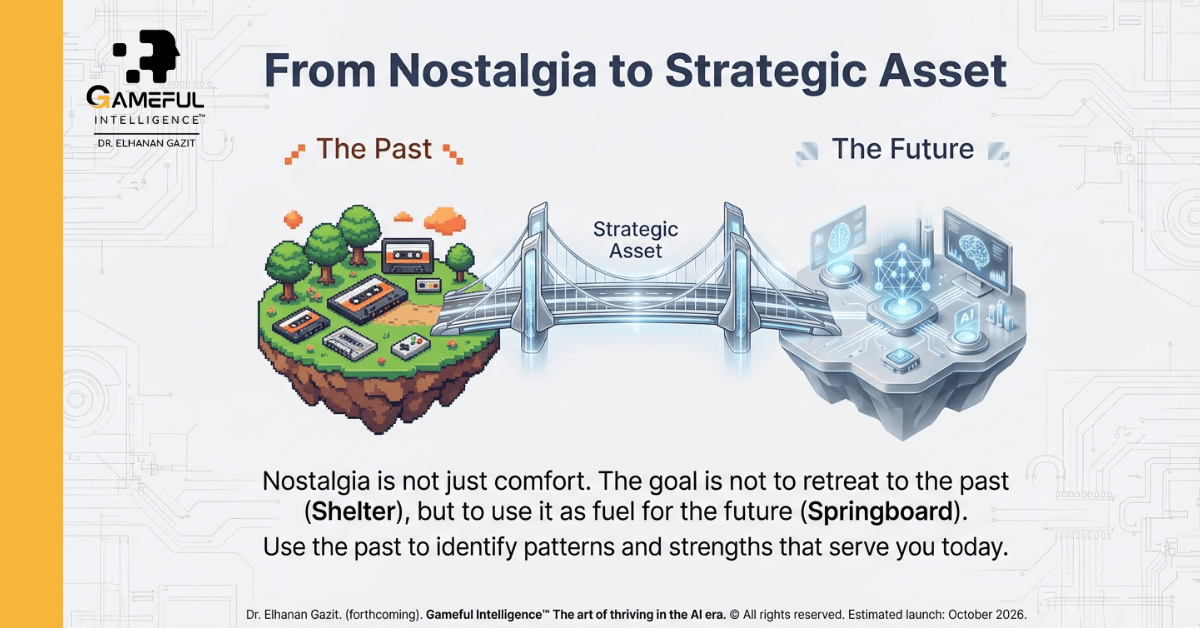
Nostalgia is less a single note and more a composition—emotion, memory, and reward working in concert to bring forth a sense of belonging. There is no isolated center for nostalgia, only subtle interaction. Perhaps the lesson is to curate our own archives of achievement, much as an athlete draws strength from past victories. By recording our successes and nurturing habits that our future selves will cherish, we transform memory into momentum.
A practical step emerges from this reflection: recall three moments of genuine accomplishment. What thread connects them? What lesson quietly persists?
Tomorrow, let that insight guide your response to a present challenge. In this way, nostalgia becomes not a retreat, but an anchor between who we were and who we are becoming.
Discussing past successes with your team or peers can be valuable. Research indicates that collective reflection can generate new ideas and improve group performance. To delve even deeper, ask your teammates, “What past win still energizes you?” This question can help cultivate psychological safety and lead to richer idea flow within your team.
Let nostalgia also serve as a map, pointing to relationships and mentors who shaped your journey. Reaching out to these figures can rekindle common purpose and open new paths for growth.
Challenge:
Reflection alone is not enough; growth is a process of continual iteration. Imagine revisiting a photograph from a past project and recalling a moment when a team truly came together. What if that memory became the seed for a new approach today? By experimenting, observing, and adapting, we allow the lessons of the past to inform the evolution of our present, turning nostalgia into a living hypothesis for progress.
Consider how the choices you make now will one day become the memories you return to. Each action is a step in the story you will someday tell yourself.
Ask: How can you use your past to gain a competitive edge today?
Invite others into this reflection. Ask a friend or colleague: what do you hope your future self shall remember about today? In sharing these hopes, you may discover new ambitions or shared directions.
If you lead a team, encourage members to share stories of overcoming past challenges. Collective nostalgia can support a growth mindset and help groups adapt to change.
Don’t just play, master the game.
Organizations, too, can benefit from making introspection a ritual. By regularly sharing accounts of past challenges and lessons, leaders can help embed a culture where memory informs strategy. A simple practice, such as beginning meetings with a story of a past turning point can transform reflection from an afterthought into a source of collective wisdom.
Algorithms nudge, but you steer.
What you do using nostalgia, how you transform feeling into forward motion, matters most. To anchor this action, I challenge you to contact one dormant contact in the next 24 hours. This small step can transform reflection into substantial progress.
Nostalgia empowers when you act on it.
- Dr. Elhanan Gazit
To be open to the past is not to be trapped by it. Those who thrive use nostalgia as a springboard, not a shelter-gathering energy from memory to reach new heights.
Revive the moments that shape a life of meaning. Imagine yourself in 2036, looking back with thankfulness for the step you took today. What message would your future-self send to you now? Let this imagined note become a calm promise to begin.
What is your 2016?
What will your 2036 self-thank you for starting today?
Picture yourself in 2036, coffee held in hand, surveying the landscape of your life. The projects completed, the relationships deepened, the growth hard-won. Let this vision of your future self guide your choices now, each step anchored in the story you are still writing.
Meta-Play Your Life!
Elhanan Gazit
January, 2026
💬 Got thoughts, questions, or reflections? Share in comments:
Where did you first encounter a technology that seemed like science fiction, and which is now part of our lives?
read every message.
Do you want to explore how the Gameful Intelligence™ approach could apply to your enterprise, your team, your accelerator, or your next project?
Connect with me on LinkedIn or Instagram.
Disclaimer, Copyrights, Trademark & AI Disclosure » here
*Adapted from Dr. Elhanan Gazit’s forthcoming book: Gameful Intelligence™: The Art of Thriving in the Age of AI. Publisher: JuLoot Publishing House.
Estimated launch date: October 2026.